Internal deployment
We run our own business on the framework first.
This is not a client case study. We don't have a published client result yet, and we won't dress one up. It's our own invoicing, outreach and enquiry handling, running on the same pattern we'd deploy for you: the model drafts, guardrails check, and a person decides.
Three agents, one pattern
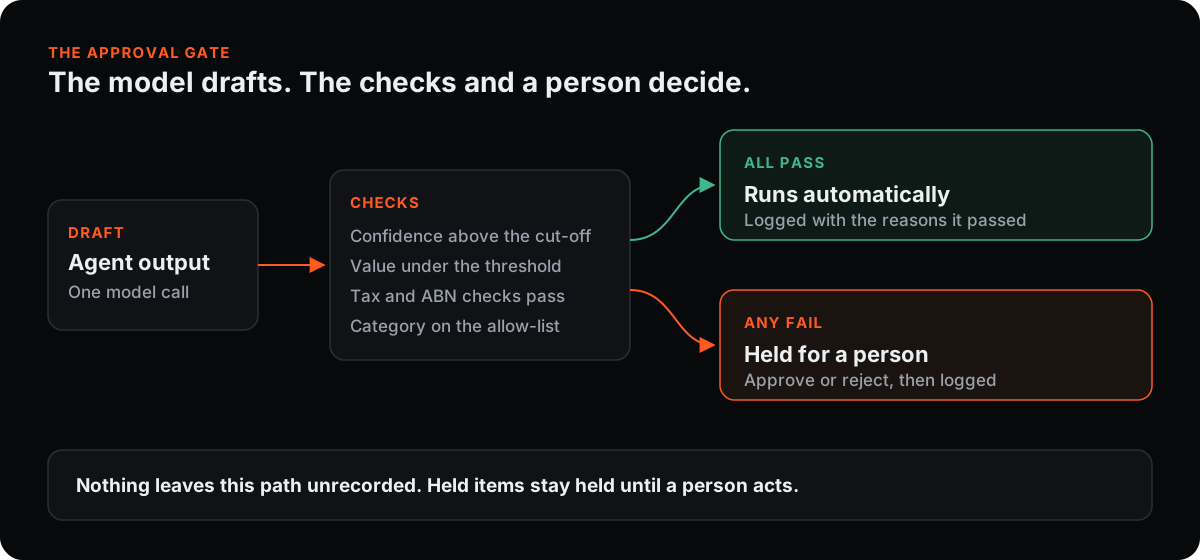
Each agent makes one model call. Everything around that call is ordinary code we can read, test and audit: limits, allow-lists, a review queue, and a record of every decision with its reasons.
1. Invoice agent
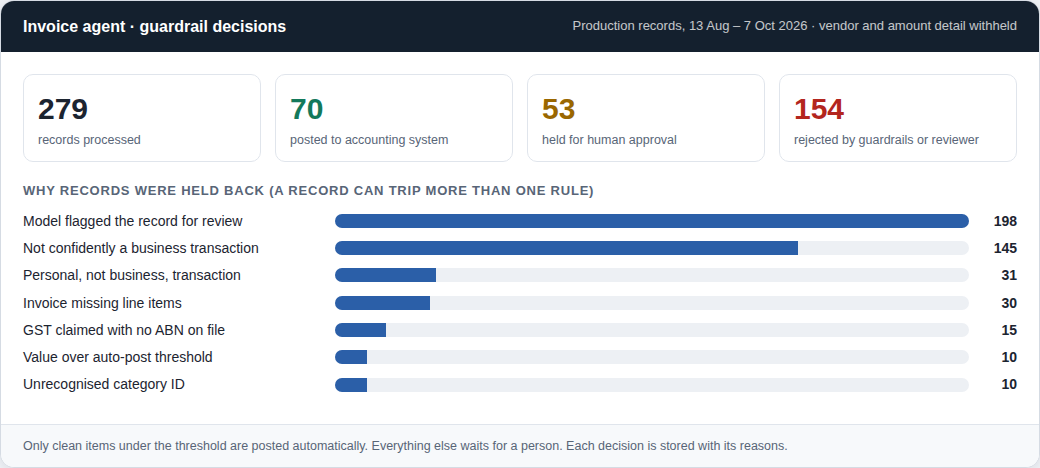
Reads incoming invoices and expense emails, extracts the details, and decides what happens next. Only clean items under the threshold, with the tax checks passing and the category on an allow-list, are posted to the accounting system automatically. Everything else is held for a person.
2. Outreach drafting
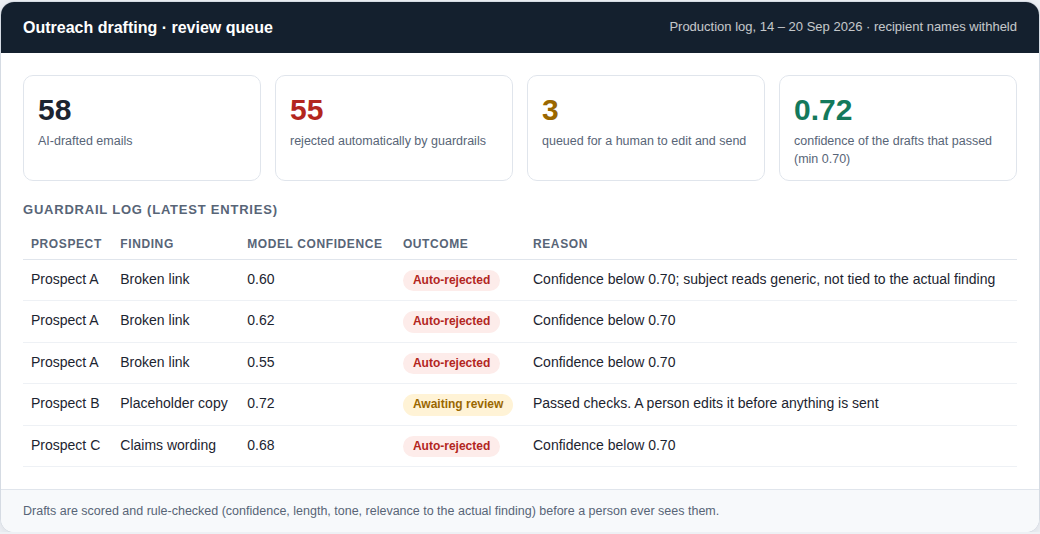
Drafts short emails to prospects from a site audit. Each draft is scored and checked for confidence, length and whether the subject actually relates to the finding. Failing drafts are rejected before anyone sees them. Passing drafts wait for a person to edit and send.
3. Enquiry triage
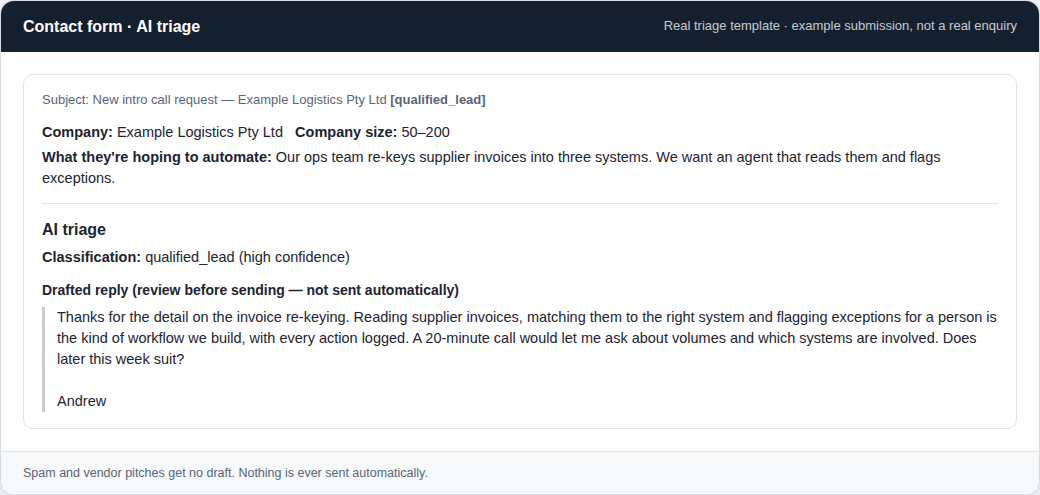
Classifies each contact-form enquiry as a qualified lead, a vendor pitch, spam or unclear. Only qualified or unclear enquiries get a drafted reply. The draft goes to the founder marked "review before sending" and is never sent automatically.
What this does not show
- Not a client result. These are our own systems. They show the pattern working, not a customer's outcome.
- A queue is only as good as the person clearing it. 53 invoice records are still waiting for approval. An approval path means someone has to approve.
- The model is the least trusted part. It flagged its own output for review 198 times, and the guardrails around it did the rest of the stopping.
- The first outreach drafts were mostly rejected. 55 of 58 failed the confidence check. That is the guardrail doing its job, and it tells us the drafting prompt still needs work.